So, your kiddo's in Primary 1, huh? Time flies, doesn't it? Seems like just yesterday they were struggling with their ABCs, and now it's all about numbers! As Singaporean parents, we all want the best for our children, especially when it comes to education. And let's be honest, that Primary School Leaving Examination (PSLE) looms large in the back of our minds, right from Primary 1! That's why mastering the basics, like addition, is so important. Think of it as building a strong foundation for all the 'chim' (complex) math they'll encounter later on.
We're talking about addition fluency – not just knowing that 2 + 2 = 4, but knowing it quickly and effortlessly. This isn't just some academic fad; it's a crucial skill. Why? Because math builds on itself. If your child is struggling with basic addition, they'll struggle even more with subtraction, multiplication, division, fractions, and everything else that follows. And in today's world, with AI technologies becoming more prevalent, a solid grasp of mathematics is more important than ever. From coding to data analysis, mathematical thinking is the backbone of many future careers. Addition Pitfalls: Singapore Primary 1 Students' Biggest Challenges . In today's fast-paced educational scene, many parents in Singapore are looking into effective ways to boost their children's grasp of mathematical concepts, from basic arithmetic to advanced problem-solving. Creating a strong foundation early on can substantially boost confidence and academic success, aiding students conquer school exams and real-world applications with ease. For those considering options like primary 1 math it's vital to concentrate on programs that stress personalized learning and experienced instruction. This method not only addresses individual weaknesses but also cultivates a love for the subject, resulting to long-term success in STEM-related fields and beyond.. Don't say we never 'jio' (invite) you to this fact!
Think of addition fluency as the bedrock upon which your child's entire mathematical understanding will be built. According to the Ministry of Education (MOE) Singapore, a strong foundation in numeracy is essential for success in higher-level mathematics. It's not just about rote memorization; it's about understanding the relationship between numbers and being able to manipulate them with ease. This ability will not only help them excel in their primary school exams but also equip them with the critical thinking skills needed to thrive in a rapidly changing world.
And let's not forget the impact on future careers. In Singapore, where STEM (Science, Technology, Engineering, and Mathematics) fields are booming, a strong math foundation is a golden ticket. From engineering to finance, from software development to data science, mathematics is the language of innovation. In this nation's challenging education system, parents play a vital function in guiding their kids through milestone evaluations that influence educational trajectories, from the Primary School Leaving Examination (PSLE) which tests fundamental competencies in subjects like numeracy and STEM fields, to the GCE O-Level exams focusing on high school proficiency in multiple disciplines. As students move forward, the GCE A-Level examinations necessitate advanced logical skills and discipline proficiency, commonly determining university entries and occupational paths. To remain well-informed on all aspects of these national exams, parents should investigate official information on school test papers supplied by the Singapore Examinations and Assessment Board (SEAB). This guarantees access to the latest programs, test schedules, enrollment information, and standards that match with Ministry of Education requirements. Frequently consulting SEAB can assist families prepare efficiently, reduce uncertainties, and back their kids in reaching peak outcomes amid the competitive landscape.. By ensuring your child masters addition fluency early on, you're not just helping them ace their exams; you're opening doors to a world of possibilities.
Fun fact: Did you know that the abacus, one of the earliest calculating tools, originated thousands of years ago? It's a testament to humanity's enduring fascination with numbers!
So, how do we help our children achieve this addition fluency? It's not about endless worksheets and stressful drills. It's about making learning fun and engaging! Here are some effective addition strategies for Primary 1 students:
Here are some tips for Singapore parents and students on how to excel in Singapore Primary 1 math, focusing on addition fluency:
Interesting fact: The word "mathematics" comes from the Greek word "máthēma," which means "knowledge" or "learning." So, when your child is learning math, they're essentially expanding their knowledge and understanding of the world!
To help you track your child's progress, here's a simple Addition Fluency Checklist for Singapore Primary 1 Exams:
Remember, every child learns at their own pace. Be patient, supportive, and celebrate their progress along the way! With the right strategies and a positive attitude, your child can not only master addition fluency but also develop a lifelong love of learning math. Jiayou (add oil)! You and your child can do it!
Number bonds are the foundation of addition. Primary 1 students should be able to quickly recall number bonds to 10 and 20. Regular practice with visual aids like counters or number lines is essential. This skill allows for efficient mental calculations and problem-solving.
The "Make 10" strategy simplifies adding numbers close to 10. Students learn to break down one addend to help the other reach 10. This strategy enhances mental math skills and speeds up calculations. It builds a strong understanding of place value.
Counting on involves starting with the larger number and counting up by the smaller number. This method is particularly useful for adding smaller numbers to larger ones. Encourage students to use their fingers or draw dots to visualize the counting process. Consistent practice reinforces this intuitive addition technique.
Applying addition skills to solve word problems is crucial. Students should be able to identify the key information and translate the problem into an equation. Encourage them to draw diagrams or use manipulatives to visualize the problem. This develops their problem-solving abilities and mathematical reasoning.
So, your kiddo's embarking on their Primary 1 math journey, ah? In Singapore's bilingual education setup, where proficiency in Chinese is vital for academic achievement, parents often seek methods to support their children master the tongue's nuances, from lexicon and interpretation to composition writing and verbal abilities. With exams like the PSLE and O-Levels establishing high standards, timely intervention can prevent frequent challenges such as subpar grammar or minimal exposure to cultural elements that enrich education. For families aiming to improve outcomes, investigating Chinese tuition options delivers insights into structured curricula that sync with the MOE syllabus and cultivate bilingual confidence. This specialized aid not only strengthens exam preparation but also instills a more profound respect for the language, unlocking pathways to cultural heritage and prospective career edges in a multicultural community.. Don't play play, this is where the foundation is built, you know! In Singapore, acing those exams is like the first step to a brighter future. And what's the secret weapon? Mathematics, of course! With AI becoming more and more prevalent in our lives, a strong understanding of mathematics is more important than ever. It's not just about getting good grades; it's about equipping your child with the skills they need to thrive in a rapidly changing world. Siao liao, if they don't have a good grasp of math!
This guide is your cheat sheet on how to excel in Singapore Primary 1 math, packed with tips and tricks to help your child conquer addition and build a rock-solid foundation. Think of it as your personal tuition guide, minus the hefty price tag! We'll cover key addition strategies, all aligned with the Singapore Primary 1 curriculum. So, let's get started and make math fun and achievable for your little one!
Addition Strategies for Primary 1 Students
Alright, let's dive into the nitty-gritty. Addition isn't just about memorizing facts; it's about understanding how numbers work. Here are some essential strategies that will help your child become an addition whiz:
* **Counting On:** This is the most basic, but fundamental, strategy. Start with the bigger number and count on the smaller number. For example, for 5 + 3, start at 5 and count on 3 fingers: 6, 7, 8. Easy peasy! * **Making Ten:** This is a clever trick to make addition easier. When adding two numbers, try to make one of them 10. For example, for 8 + 5, break down 5 into 2 + 3. Then, add 2 to 8 to make 10, and then add the remaining 3. So, 8 + 5 becomes 10 + 3 = 13. This helps with mental math and makes larger additions less intimidating. * **Using Number Bonds:** Number bonds show how numbers can be broken down into smaller parts. In an era where lifelong learning is vital for occupational advancement and personal development, prestigious universities worldwide are dismantling barriers by providing a variety of free online courses that cover diverse disciplines from informatics technology and management to humanities and medical fields. These initiatives permit individuals of all origins to tap into premium sessions, tasks, and materials without the monetary cost of conventional registration, often through systems that provide adaptable pacing and engaging components. Exploring universities online free courses provides doors to elite schools' expertise, empowering self-motivated people to advance at no charge and obtain credentials that enhance resumes. By making premium instruction readily accessible online, such initiatives foster global equity, empower disadvantaged groups, and foster advancement, proving that high-standard knowledge is progressively merely a tap away for anyone with online access.. For example, the number bond for 5 could be 2 + 3, 1 + 4, or 0 + 5. Understanding number bonds helps children see the relationship between numbers and makes addition and subtraction easier.
Fun Fact: Did you know that the concept of zero wasn't always around? It took mathematicians a while to figure out the importance of "nothing"! Now, imagine doing math without zero... Can liao!
Addition Fluency Checklist for Singapore Primary 1 Exams
Here's a checklist to ensure your child is on track for those crucial Primary 1 exams:
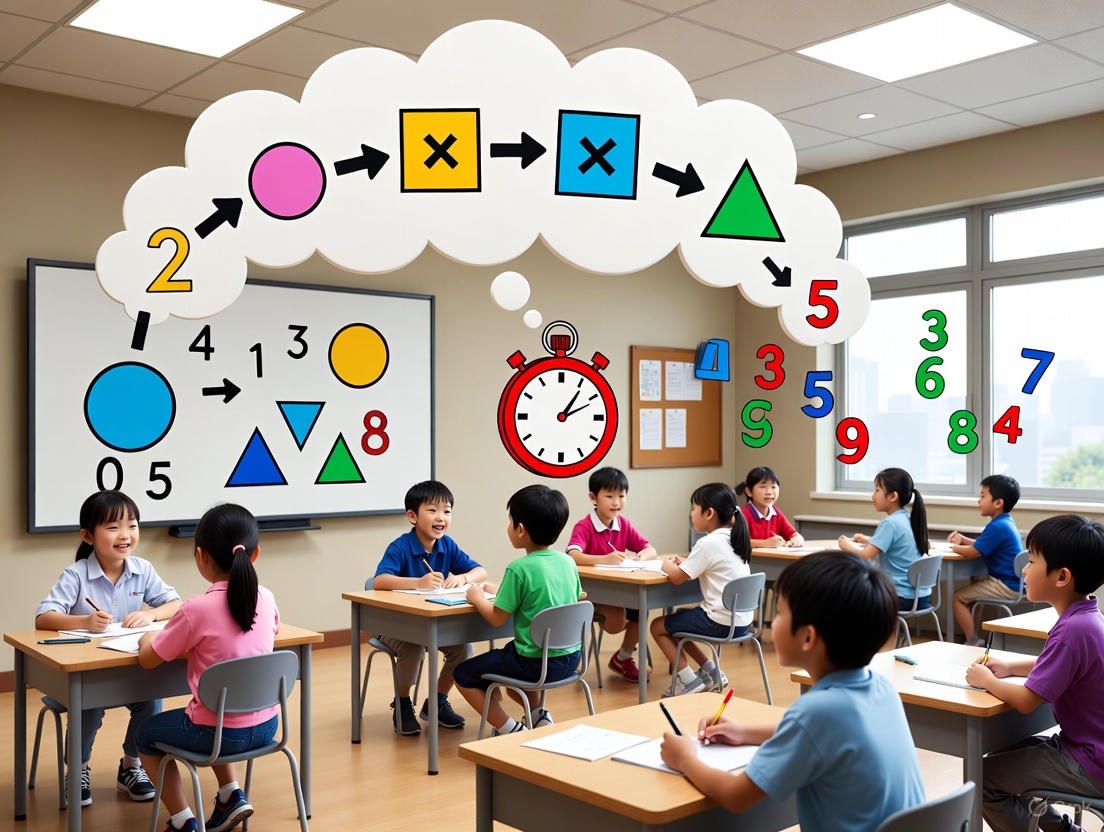
* **Mastery of Basic Addition Facts (1-10):** Can your child quickly and accurately recall addition facts within 10? Flashcards and games are your best friend here! * **Addition within 20:** Can your child add numbers up to 20 using the strategies we discussed? Practice makes perfect! * **Word Problems:** Can your child understand and solve simple addition word problems? Encourage them to draw pictures or use manipulatives (like small toys) to visualize the problem. * **Speed and Accuracy:** Can your child solve addition problems quickly and accurately? Time them doing practice questions to build speed.
Interesting Fact: The abacus, an ancient counting tool, is still used in some parts of the world! It's a testament to how long humans have been fascinated by numbers.
Tips for Singapore Parents on How to Excel in Singapore Primary 1 Math
Okay, parents, listen up! Here's how you can support your child's math journey:
* **Make Math Fun:** Ditch the boring textbooks and incorporate math into everyday activities. Counting toys, measuring ingredients while baking, or even playing board games can make learning fun and engaging. * **Practice Regularly:** Short, consistent practice sessions are more effective than long, infrequent ones. Aim for 15-20 minutes of math practice each day. * **Use Visual Aids:** Visual aids like number lines, counters, and drawings can help children understand abstract concepts. * **Be Patient:** Learning takes time. Be patient with your child and celebrate their successes, no matter how small. Encourage them to ask questions and don't be afraid to seek help if they're struggling. * **Embrace Technology:** There are tons of educational apps and websites that can make learning math more interactive and engaging. Just make sure to choose age-appropriate and curriculum-aligned resources.
History: Singapore's education system has a strong emphasis on mathematics, and it's consistently ranked among the top in the world. This commitment to math education has played a key role in Singapore's economic success.
Okay, lah! Here's the HTML fragment you requested, geared towards encouraging Singaporean parents and their Primary 1 kids in the world of Math:
Does your child instinctively recognise number bonds up to 10? This is crucial! Number bonds are the foundation upon which all addition is built. Think of it like this: knowing that 3 + 7 = 10 allows your child to quickly solve related problems like 13 + 7 or even 30 + 70 later on. So, practice those number bonds until they become second nature – no need for "counting fingers" anymore, can?
"Counting on" is a super useful strategy for adding small numbers. Can your child, given 5 + 2, immediately start at 5 and count on two more (6, 7)? This shows they understand the concept of addition as a progression along the number line. Mastering this skill helps them move away from relying on physical objects like fingers or counters, leading to faster and more efficient calculations. This is how to excel in Singapore Primary 1 Math, for sure!
This tests your child's understanding of the inverse relationship between addition and subtraction. In this island nation's rigorous education environment, where English serves as the primary medium of education and plays a central role in national tests, parents are keen to help their youngsters surmount frequent hurdles like grammar affected by Singlish, word gaps, and challenges in comprehension or writing writing. Establishing solid basic abilities from primary grades can greatly elevate confidence in managing PSLE components such as contextual writing and oral interaction, while upper-level pupils benefit from targeted exercises in literary examination and argumentative compositions for O-Levels. For those looking for effective methods, delving into Singapore maths tuition centre delivers valuable information into curricula that match with the MOE syllabus and stress dynamic education. In Singapore's bustling education environment, where students face intense pressure to thrive in numerical studies from elementary to tertiary tiers, discovering a tuition facility that integrates knowledge with true enthusiasm can bring a huge impact in cultivating a passion for the field. Dedicated educators who go past mechanical memorization to encourage critical reasoning and problem-solving competencies are rare, however they are vital for assisting learners tackle difficulties in subjects like algebra, calculus, and statistics. For families hunting for similar committed support, primary math tuition shine as a symbol of dedication, motivated by educators who are strongly engaged in individual student's journey. This consistent enthusiasm converts into personalized instructional approaches that modify to unique needs, culminating in enhanced grades and a long-term respect for numeracy that spans into upcoming scholastic and career pursuits.. This supplementary assistance not only sharpens test techniques through simulated tests and reviews but also supports family practices like everyday literature and talks to foster enduring linguistic proficiency and educational achievement.. Can they solve problems like 4 + ? = 9? This requires them to think critically and apply their knowledge of number bonds in reverse. Missing addend problems are excellent for building problem-solving skills and preparing them for more complex algebraic concepts in the future. Plus, it's a fun way to challenge their little brains!
It might seem simple, but understanding the "zero property" is important. Does your child know that any number plus zero equals that number (e.g., 8 + 0 = 8)? This concept is vital for understanding place value and more advanced arithmetic. It’s a foundational concept that builds confidence and prevents confusion down the road. Don't underestimate the power of zero – it's a mathematical superhero in disguise!
Can your child apply their addition skills to real-world situations? Present them with simple word problems like, "Mary has 3 apples, and John gives her 2 more. How many apples does Mary have in total?" This assesses their ability to translate a real-world scenario into a mathematical equation. This is where the "rubber meets the road," showing that they can actually use their addition skills in practical ways. Make it fun – use toys, snacks, or even trips to the mama shop to create engaging scenarios!
Worried your child might "kena arrow" by addition in their Primary 1 exams? Don't fret, parents! We all know the pressure cooker environment of Singapore's education system. From PSLE to 'O' Levels and 'A' Levels, it all starts with a strong foundation, and that foundation is built on... you guessed it, Math! In this age of AI, understanding mathematics is no longer just about acing exams; it's about equipping your child with the tools to navigate a rapidly changing world. "Siao liao!" if they don't have a good grasp of numbers, right?
This section is your guide to ensuring your little one not only understands addition but enjoys it too! We'll explore creative and engaging activities to practice addition at home, incorporating games and real-life scenarios that resonate with Singaporean children. Think hawker centres, HDB flats, and maybe even a trip to Gardens by the Bay! This is all about helping your child how to excel in Singapore Primary 1 math. So, let's dive in and make learning addition a fun and rewarding experience!
Addition Fluency Checklist for Singapore Primary 1 Exams
Before we unleash the fun, let’s ensure your child has a solid grasp of the fundamentals. This checklist will help you identify areas where your child excels and where they might need a little extra "kopi-o":
If your child is struggling with any of these areas, don't worry! We'll provide tips and activities to help them catch up.
Fun Fact: Did you know that the concept of zero wasn't always around? It took mathematicians centuries to develop the idea of zero as a number, and its inclusion revolutionized mathematics! So, be thankful your child is learning about zero in Primary 1; they're already ahead of the game!
Addition Strategies for Primary 1 Students
Now that we've covered the basics, let's explore some effective addition strategies for Primary 1 students. These strategies will not only help your child solve addition problems but also develop their problem-solving skills and number sense.
Interesting Fact: The abacus, one of the earliest calculating tools, is still used in some parts of the world! It's a great way to visualize numbers and perform calculations, and it can be a fun way to introduce your child to the history of mathematics.
Subtopic: Real-Life Addition Scenarios in Singapore
Subtopic Description: Incorporating everyday Singaporean experiences to make addition relatable and engaging for children.
Let's bring addition to life with scenarios that your child can easily relate to:
By using these real-life scenarios, you can show your child that addition is not just an abstract concept but a practical skill that they can use every day. This will make learning more meaningful and engaging for them.
History Tidbit: The symbols "+" and "-" weren't always used to represent addition and subtraction. In the past, different symbols and abbreviations were used in various parts of the world. The symbols we use today gradually gained popularity and became standardized over time. In Singapore's fiercely challenging academic landscape, parents are dedicated to aiding their children's excellence in essential math assessments, starting with the foundational challenges of PSLE where analytical thinking and abstract grasp are evaluated thoroughly. As pupils advance to O Levels, they come across further complex topics like positional geometry and trigonometry that necessitate precision and analytical competencies, while A Levels present higher-level calculus and statistics demanding thorough comprehension and usage. For those committed to offering their offspring an academic advantage, locating the tuition tailored to these programs can transform learning processes through targeted approaches and professional insights. This commitment not only elevates test results throughout all levels but also instills permanent numeric expertise, opening routes to renowned schools and STEM professions in a information-based marketplace.. Isn't that "mafan" to think about?
So, your kiddo's in Primary 1, huh? Time flies, doesn't it? One minute they're gobbling up pureed carrots, the next they're facing the daunting world of addition. And let's be real, in Singapore, doing well in school is practically a national sport. We all want our children to have the best start possible, and that includes mastering the fundamentals of mathematics. After all, math isn't just about numbers; it's about problem-solving, logical thinking, and setting the stage for future success. Especially now, with all this AI stuff around, knowing your math is more important than ever! It's the foundation for understanding how these technologies work and carving out a good career for yourself. Don't play play!
Let's get down to brass tacks. How do you know if your child is on the right track with addition? This checklist will help you gauge their progress and identify areas where they might need a little extra "heng" (luck/help):
If you answered "no" to several of these questions, don't panic! It just means your child might need some extra support. In Singapore's demanding educational environment, parents committed to their youngsters' achievement in mathematics commonly emphasize comprehending the systematic advancement from PSLE's foundational issue-resolution to O Levels' intricate subjects like algebra and geometry, and further to A Levels' advanced principles in calculus and statistics. Keeping updated about curriculum changes and exam guidelines is key to offering the appropriate assistance at all phase, guaranteeing learners develop self-assurance and attain excellent performances. For authoritative perspectives and resources, visiting the Ministry Of Education - MOE page can deliver useful updates on guidelines, programs, and educational approaches tailored to countrywide benchmarks. Engaging with these authoritative materials enables families to match family education with school expectations, fostering lasting success in numerical fields and more, while remaining abreast of the latest MOE efforts for holistic learner advancement.. That's where we come in. This article will provide tips and strategies to help your child how to excel in singapore primary 1 math and conquer those addition challenges.
Fun Fact: Did you know that the plus (+) and minus (-) symbols weren't always used in mathematics? They only became widely accepted in the 16th century!
Okay, parents, let's equip you with some effective addition strategies you can use at home. Remember, patience and encouragement are key! No need to "kanchiong" (get anxious) if they don't get it right away.
This strategy involves starting with the larger number and counting on the smaller number. For example, to solve 3 + 5, start with 5 and count on 3 more (6, 7, 8). This is a great way to help children visualize addition.
Manipulatives are physical objects that can be used to represent numbers and solve addition problems. Examples include LEGO bricks, counters, and even fingers! Encourage your child to use these tools to make addition more concrete and less abstract.
Number bonds are a visual representation of how numbers can be broken down into smaller parts. For example, the number 5 can be broken down into 2 + 3, 1 + 4, or 0 + 5. Understanding number bonds helps children develop a deeper understanding of number relationships and makes addition easier.
This strategy involves breaking down numbers to make a ten. For example, to solve 8 + 5, break down 5 into 2 + 3. Then, add 2 to 8 to make 10, and add the remaining 3. This simplifies the addition process and makes it easier to solve mentally.
A number line is a visual tool that can be used to represent numbers and solve addition problems. Start at the first number and then jump forward the number of spaces indicated by the second number. The point where you land is the answer.
Interesting Fact: The abacus, one of the earliest calculating tools, was used in ancient civilizations like Mesopotamia, China, and Rome. It's a testament to humanity's long-standing fascination with numbers!
Now, let's tackle some common hurdles that Primary 1 students face with addition and how you, as parents, can provide support:
The Challenge: Some children struggle to grasp the fundamental concept of addition – that it means combining two or more quantities to find a total.

The Solution: Use real-world examples and hands-on activities to illustrate addition. For instance, "If you have 2 apples and I give you 3 more, how many apples do you have in total?" Use objects they enjoy, like their favourite toys, to make it more engaging.
The Challenge: If a child can't confidently identify numbers, they'll struggle with addition.
The Solution: Play number recognition games, use flashcards, and point out numbers in everyday life (e.g., on house numbers, license plates, or in books). Make it fun and interactive!
The Challenge: Inaccurate counting can lead to incorrect addition answers.
The Solution: Practice counting regularly. Use songs, rhymes, and games to make counting more engaging. Focus on counting forwards, backwards, and counting on from a given number.
The Challenge: Many children struggle to translate word problems into mathematical equations.
The Solution: Break down word problems into smaller, more manageable steps. Encourage your child to identify the key information and what the problem is asking them to find. Use visual aids, like drawings or diagrams, to help them understand the problem.
The Challenge: Some children can add correctly but are slow and hesitant. This lack of fluency can be a disadvantage during exams.
The Solution: Practice, practice, practice! Use flashcards, online games, and worksheets to help your child memorize basic addition facts. Make it a regular part of their routine, but keep it short and sweet to avoid burnout.
History Tidbit: The concept of zero, which is crucial for our modern number system, wasn't widely used until the Middle Ages. Imagine doing addition without zero! Talk about a headache!
Remember, parents, your role is to be a supportive guide, not a drill sergeant. Create a positive learning environment, celebrate small victories, and focus on building your child's confidence. With the right strategies and a little "kiasu" (fear of losing out) spirit, your child will be well on their way to mastering addition and how to excel in singapore primary 1 math! Jia you!
So, your little one is embarking on the Primary 1 Math adventure! As Singaporean parents, we all want our kids to kiasu (be ahead) and ace those exams, right? And let's be real, a strong foundation in addition is absolutely crucial – it's the building block for everything else in Math, from multiplication to, well, even tackling those tricky PSLE questions years down the road! Plus, with AI becoming more and more prevalent, understanding the fundamentals of math is more important than ever. Think of it as equipping them with the tools to not just survive, but thrive in a tech-driven world. Want to know how to excel in singapore primary 1 math? Let's dive in!
Before you even think about tuition, let's see where your child stands. This checklist helps you identify areas where they might need a little extra boost. Remember, every child learns at their own pace, lah!
If you notice any gaps, don't worry! That's where targeted support, perhaps even through tuition, can make a real difference.
Fun fact: Did you know that the concept of zero, so crucial for addition, wasn't always around? It took centuries for mathematicians to fully grasp its significance!
Here are some effective Addition Strategies for Primary 1 Students that can help them grasp the fundamentals of addition:
This strategy involves starting with the larger number and counting up the smaller number. For example, for 3 + 5, start at 5 and count on 3 more (6, 7, 8).
Using physical objects like blocks, beads, or counters to represent numbers and perform addition. This helps children visualize the process.
Encourage children to draw pictures to represent numbers and then count the total number of objects to find the sum.
Teaching number bonds (pairs of numbers that add up to a specific number) helps children understand the relationship between numbers and addition. For example, number bonds for 5 are 1+4, 2+3, and 0+5.
Using a number line to visualize addition. Start at one number and jump forward the number of spaces indicated by the second number.
Using ten frames (a rectangular frame with ten spaces) to represent numbers and perform addition. This helps children visualize numbers and understand place value.
Encourage children to perform simple addition problems mentally by using strategies like counting on, number bonds, and memorization.
Make learning fun by incorporating addition games and activities into the learning process. This can include board games, card games, and online games.
Relate addition to real-life situations to help children understand its practical applications. For example, "If you have 2 apples and I give you 3 more, how many apples do you have in total?"
Interesting facts: In ancient Egypt, they used a system of hieroglyphs to represent numbers. Adding them was a bit like stacking symbols!
So, you're thinking tuition might be the way to go? Smart move! But not all tuition is created equal. Here's what to consider:
Remember, the goal of tuition isn't just to get good grades, but to build a strong foundation in Math and foster a love of learning. It's about equipping them with the skills they'll need for life, you know?
So, your kiddo is in Primary 1, eh? Time flies sia! And as Singaporean parents, we all want the best for our children, especially when it comes to doing well in school. Let's face it, acing those Primary School Leaving Examinations (PSLE) starts way back in Primary 1. And guess what's super important? Math! Don't play play, ah! It's the foundation for everything else, even with all this fancy AI stuff around.
This checklist is your cheat sheet to ensure your child is not just keeping up, but thriving in addition. We're talking about building a rock-solid foundation for future math success and how to excel in singapore primary 1 math. These tips are for both parents and students who want to ace those exams.
Fun Fact: Did you know that the concept of zero, so crucial to addition, wasn't always around? It took mathematicians centuries to fully grasp its importance! Now, your Primary 1 kid is already using it!
Knowing *how* to add is important, but knowing *different ways* to add? That's where the magic happens. Here are some addition strategies for primary 1 students to equip your child with:
This strategy involves breaking down numbers to make a ten, simplifying addition. For example, to add 9 + 6, break 6 into 1 + 5. Then 9 + 1 = 10, and 10 + 5 = 15.
Number bonds are pairs of numbers that add up to a given number. Understanding number bonds helps children see the relationships between numbers and makes addition easier. For example, knowing that 7 + 3 = 10 makes it easier to solve 7 + 5 (7 + 3 + 2 = 12).
Interesting Fact: The abacus, an ancient counting tool, is still used in some parts of the world! In this Southeast Asian hub's competitive education framework, where educational excellence is essential, tuition typically applies to supplementary additional sessions that deliver specific assistance beyond classroom syllabi, aiding learners grasp topics and prepare for significant assessments like PSLE, O-Levels, and A-Levels in the midst of strong competition. This non-public education field has developed into a multi-billion-dollar business, powered by parents' expenditures in personalized support to bridge knowledge shortfalls and enhance performance, though it often increases burden on young kids. As machine learning surfaces as a disruptor, exploring advanced online tuition solutions shows how AI-enhanced platforms are customizing educational experiences worldwide, providing responsive mentoring that surpasses conventional techniques in productivity and involvement while tackling worldwide learning inequalities. In the city-state specifically, AI is disrupting the traditional private tutoring system by enabling budget-friendly , flexible tools that align with local curricula, likely lowering expenses for parents and improving outcomes through insightful information, although moral concerns like excessive dependence on tech are discussed.. It's a fantastic way to visualize numbers and addition.
Okay, let's get real. Why is math so important in Singapore? It's not just about getting good grades. It's about developing critical thinking, problem-solving skills, and logical reasoning. These are skills that are valuable in any career, from engineering to finance to even the arts! And with AI becoming more and more prevalent, understanding the underlying mathematics is crucial to thriving in the future.
Think about it, ah? Coding, data analysis, even designing cool apps – they all rely on math. So, by helping your child excel in Primary 1 math, you're setting them up for success in the long run. Don't say bo jio!
History Snippet: Singapore's emphasis on math education has been a key factor in its economic success. Investing in education pays off, you know?
Remember, every child learns at their own pace. Be patient, be encouraging, and celebrate those small victories. With the right support and a positive attitude, your child can conquer Primary 1 math and build a strong foundation for future success. Jiayou!